
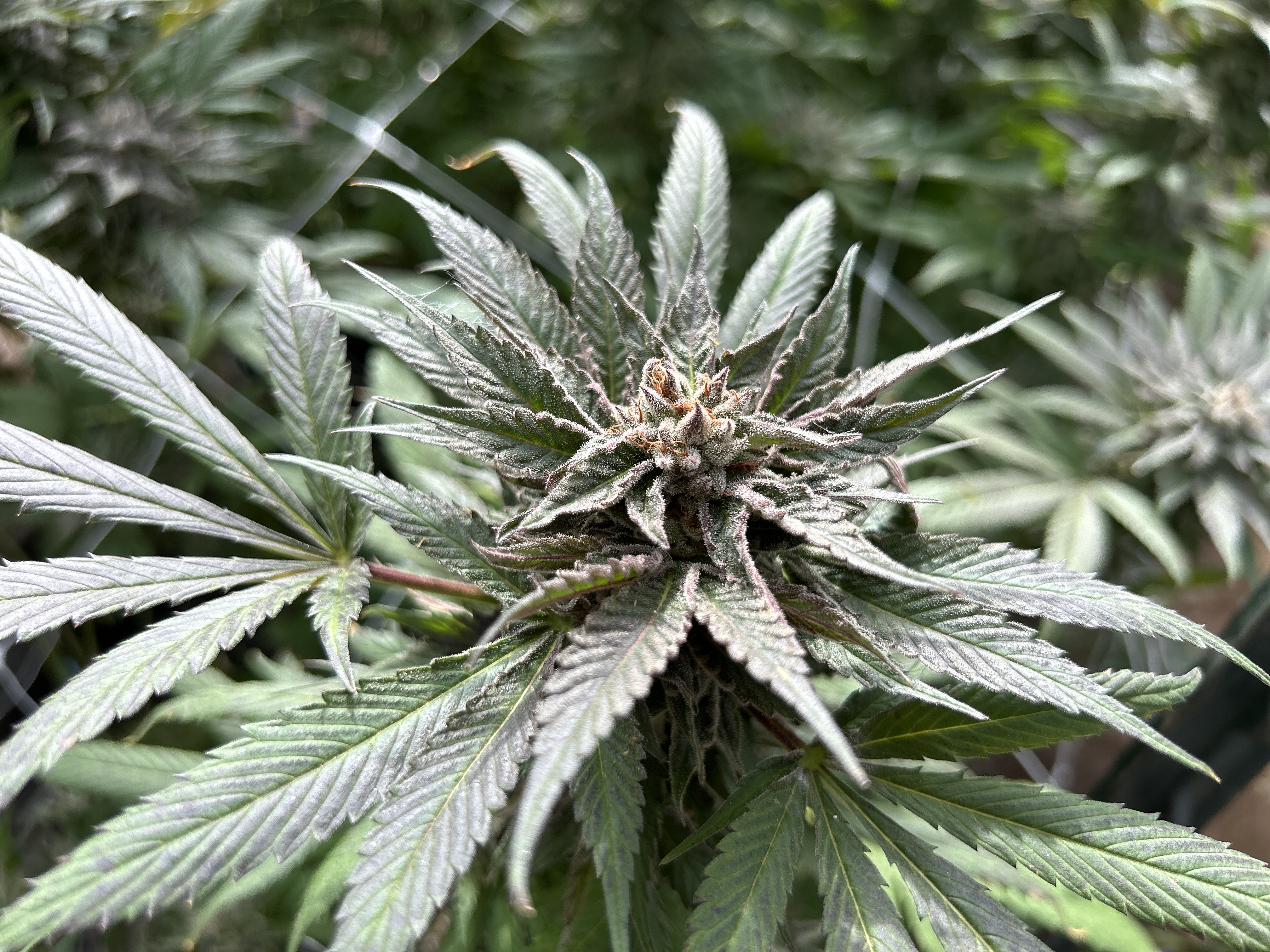
If you have ever noticed that two strains with the same THC percentage feel completely different, you have already experienced something scientists call the entourage effect. The idea is straightforward: cannabinoids like THC and CBD do not act alone. They work alongside terpenes and other plant compounds, and the combination shapes the overall experience more than any single ingredient.
The term was first introduced in cannabis research by Raphael Mechoulam and Shimon Ben-Shabat in 1998 [1]. Their work showed that certain compounds in cannabis that have no effect on their own can change the behavior of the compounds that do. Since then, the concept has become one of the most studied and debated ideas in cannabis science.
A 2024 study from Johns Hopkins University put the theory to a direct test. Researchers had participants vaporize THC alone and then THC combined with d-limonene, a citrus-scented terpene found in many cannabis strains. The result: participants who received THC plus limonene reported significantly less anxiety, nervousness, and paranoia compared to THC alone, while the other effects of THC stayed the same [2]. Limonene by itself did nothing. It only changed the experience when combined with THC.
A comprehensive review published in Pharmaceuticals in 2024 looked at 31 studies on the entourage effect and found that myrcene and linalool showed the most consistent synergistic activity when combined with CBD in preclinical models [3]. The review also noted that whole-plant cannabis extracts often performed differently than isolated cannabinoids, suggesting the full chemical profile of a strain matters.
The science is still evolving. Some researchers have found that certain terpene-cannabinoid combinations do not interact at the receptor level the way early theories predicted [4]. But the clinical evidence, especially the Johns Hopkins limonene findings, supports a more nuanced version of the idea: the other compounds in cannabis may not supercharge THC at the receptor, but they can meaningfully change how the experience feels.
This is why the same THC percentage can feel relaxing in one strain and stimulating in another. The terpene profile, the ratio of CBD to THC, and the presence of minor cannabinoids like CBG and CBC all contribute to the final experience. It is also why choosing a strain based only on THC percentage misses most of the picture. Explore our full strain lineup and their genetics in the Strain Wiki.
References
- [1] Ben-Shabat, S. et al. (1998). An entourage effect: inactive endogenous fatty acid glycerol esters enhance 2-arachidonoyl-glycerol cannabinoid activity. European Journal of Pharmacology. https://pubmed.ncbi.nlm.nih.gov/9721036/
- [2] Spindle, T.R. et al. (2024). Vaporized D-limonene selectively mitigates the acute anxiogenic effects of THC in healthy adults. Drug and Alcohol Dependence. https://www.hopkinsmedicine.org/news/newsroom/news-releases/2024/04/researchers-show-chemical-found-naturally-in-cannabis-may-reduce-anxiety-inducing-effects-of-thc
- [3] Ferreira, C. et al. (2024). The Entourage Effect in Cannabis Medicinal Products: A Comprehensive Review. Pharmaceuticals. https://www.ncbi.nlm.nih.gov/pmc/articles/PMC11870048/
- [4] Finlay, D.B. et al. (2020). Terpenoids From Cannabis Do Not Mediate an Entourage Effect by Acting at Cannabinoid Receptors. Frontiers in Pharmacology. https://www.frontiersin.org/journals/pharmacology/articles/10.3389/fphar.2020.00359/full
These statements have not been evaluated by the Food and Drug Administration. This product is not intended to diagnose, treat, cure, or prevent any disease.
Visit The Farm
Shop premium cannabis at any of our 6 California locations.